
ONE HUNDRED AND FORTY NINE
By Angelo Costadimas, from Hong Kong.

ONE HUNDRED AND FORTY EIGHT
From Rebekah Frumkin’s Socrates and Glaucon on the Home Shopping Network.
SOCRATES: So cleanliness is the complete obliteration of dirt, bacteria and unsightly stains. Am I right?
GLAUCON: Yes, Socrates.
SOCRATES: So to effectively clean, one must also sterilize, as a sterile surface is one that is also not dirty?
GLAUCON: Yes, Socrates.
SOCRATES: But an ordinary mop will not do this?
GLAUCON: No, Socrates. Look what a hassle it is for me to use! And none of the stains are coming off!
SOCRATES: Yes. It is quite impossible to get one’s kitchen satisfactorily clean with an ordinary mop. But one could add Dirt-Fighting Technology™ to an ordinary mop, could he not?
GLAUCON: It depends on what sort of technology it is.
SOCRATES: It would consist of the elongation of the mop’s bristles and an internal motor that causes the mop’s head to swivel conveniently with the flip of a switch.
GLAUCON: Then yes, I agree that one could add such technology to an ordinary mop. But would it still be an ordinary mop, Socrates?
SOCRATES: Very astute, Glaucon. It would not. For convenience’s sake, let’s call it the EZ-Klean Mop™. Now answer me this: would the EZ-Klean Mop ™, given that it has the Dirt-Fighting Technology™ I’ve just described, be able to more effectively rid spaces of dirt or plague?
ONE HUNDRED AND FORTY SEVEN
Migizi Pensoneau on the 1491s appearance on The Daily Show.
“I think back to the tailgate: the man blowing cigar smoke in my face, the man who mockingly yelled, “Thanks for letting us use your name!”, the group who yelled at us to “go the fuck home,” the little waif who threatened to cut me, the dude who blew the train horn on his truck as I walked by the hood. I think of all of that, and I think back to O’Dell crying and trying desperately to get out of the room full of calm Natives. I thought she was crying because she was caught unawares and was afraid. But I realized that was her defense mechanism, and that by overly dramatizing her experience, she continued to trivialize ours. It was privilege in action. And as I realized these things, something else became incredibly clear: She knew she was wrong.”
ONE HUNDRED AND FORTY SIX
Roger Minick’s photographs of tourists of the 1970s and 80s via It’s Nice That.
“Previously in my photographic career, when my projects took me into the landscape, I had tended to look on sightseers with disdain, and certainly had never considered them a ‘subject’ I would want to photograph seriously. Yet over the course of those days I began to feel I was witnessing something uniquely American.”

ONE HUNDRED AND FORTY FIVE
Interview with E. M. Cioran, 1984.
You’ve said a number of times, as in Drawn and Quartered, that “we should change our name after each important experience.”
After certain experiences. We should change our names right away, but after there’s no point. Because you feel that you’re another individual, that in the end you’ve touched on something extraordinary, you’re not yourself anymore. So, another life has to be started. But, that’s an illusion too. It’s an impression of the moment.
ONE HUNDRED AND FORTY FOUR
Fan Ho‘s street photography in 1950s Hong Kong.

ONE HUNDRED AND FORTY THREE
by Paula Bonet.

ONE HUNDRED AND FORTY ONE
From a portrait series by Hassan Hajjaj.

ONE HUNDRED AND FORTY
I really loved Boyhood, and really loved this song too.
ONE HUNDRED AND THIRTY NINE
Matt Bors, The Nude Selfie Sage.

ONE HUNDRED AND THIRTY EIGHT
“The impossible city is a city made of all cities. It is neither a city of the future nor a city of the past. It is a longing for the city. A city of stone and a city of glass. It is a city of spires and transparent abysses. A city of rivers streaming into an expanse of blue. It is a city of dubious beauty. Yet also a city of staggering beauty. A city of belfries harried by the screams of seagulls. A city of evergreen hills and lucid water. It is a city of children running down heaps of garbage. A city of drowsy bays and flying men and opal lakes. It is a city of sand and dunes, a city where the first and last human are covered in dust. It is a city of convents, fig-scented gardens and singing mounts. A city of redbrick castles with wide-open arms. It is a city of stone churches smelling of green water at sunup. A city of saints. It is a city of connecting islands. A city with only one weeping willow hunched over a promontory. It is a city of minarets and violet towers. A city of dreams long gone and lingering still. It is a city stippled with gold and yearning for the sun. It is all the cities you have seen and never seen. And it is the last city standing on the edge of the world, a second before the sun slips into the water.”
Lila Azam Zanganeh, from A Map of Six Impossible Things, via Maria Popova.
ONE HUNDRED AND THIRTY SEVEN
“Artists use frauds to make human beings seem more wonderful than they really are. Dancers show us human beings who move much more gracefully than human beings really move. Films and books and plays show us people talking much more entertainingly than people really talk, make paltry human enterprises seem important. Singers and musicians show us human beings making sounds far more lovely than human beings really make. Architects give us temples in which something marvelous is obviously going on. Actually, practically nothing is going on.”
Vonnegut, “When I was Twenty One,” in Wampeters, Foma and Granfalloons
A special request: Support Head & Hands at Ça Marche this year! (#136)
As some of you might know, I’ve recently been honoured to join the Board of Directors of Head & Hands, an organization that has provided essential medical, legal, and social support to Montreal youth since 1970.
I’m writing to you because every year the Farha Foundation organizes an incredible 7km walk every September called Ça Marche, a fundraiser for organizations that support men, women, and children living with HIV/AIDS. This year, I’m really proud to be walking in Ça Marche as part of the Head & Hands team, and I’d like to ask for your sponsorship.
You should know that every dollar you give will directly support the urgent (and awesome!) work that happens at Head & Hands every day. In particular, it will help to fund our youth clinic, a wide array of preventative community health care services, and desperately needed sex education in Quebec schools. Last year, we raised $26,000 at Ça Marche, and this year, our target is a cool $30,000.
Despite the ambitious goal, you should know that even contributions of $5, $10, or $15 make a major impact in small organizations like Head & Hands. So if you’re in a position where you’re able to give this year, I’d be beyond grateful if you considered sponsoring myself and our team.
Convinced? Awesome. To donate, just click here and scroll down!
With huge respect and great thanks,
Lex
ONE HUNDRED AND THIRTY FIVE
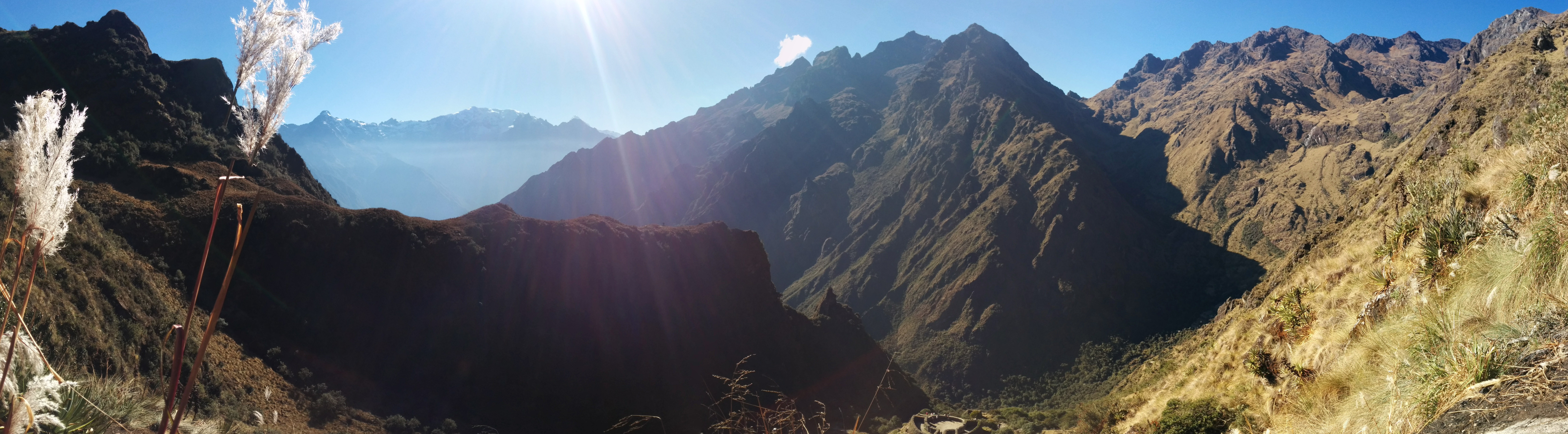
Stay humble;
the mountains are great.
 lexgill.com