A classic.

A classic.
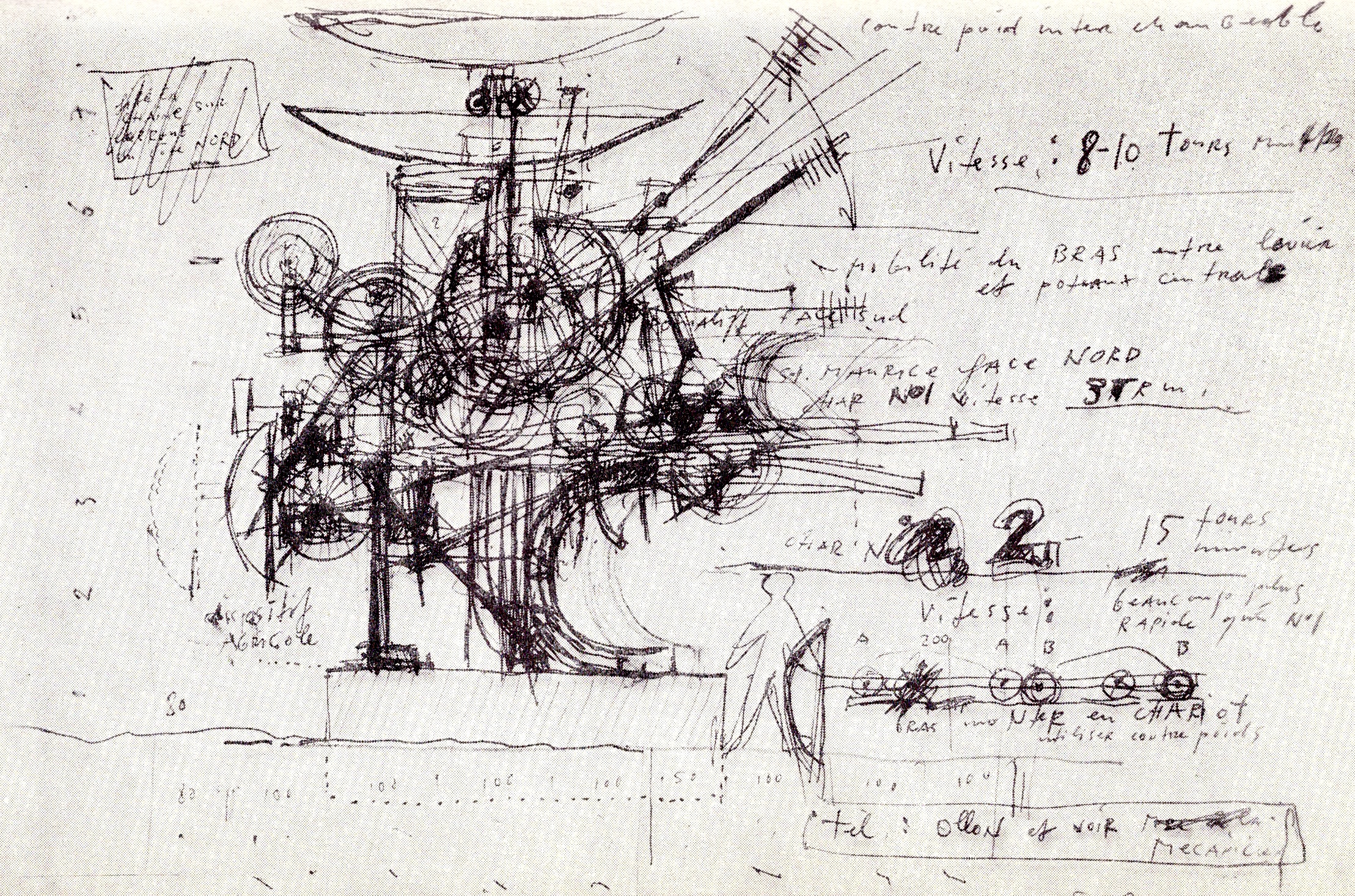
From a 1965 interview with sculptor Jean Tinguely.
What happens at the base of our civilization is incredible. We go round in circles, there’s no question about that. But insofar as it’s dynamic, we advance. This domination by machine has produced an America that is a mad circus of automated, industrial machinery, such as we’ve not yet seen in Europe. Yet even here we’ve grown oblivious to the fact that in Paris there is such a mass of machinery in the street that one hardly moves. But it will get worse: you’re going to see real madness! This kind of madness preoccupies me, and I think that with my machines I point out the stupidity of the machine; the enormous uselessness of this gigantic effort.
From On Being‘s interview with Adam Grant.
DR. GRANT: So the agreeable people are the nice, friendly, welcoming, polite — and I just assumed if you’re nice to somebody that means you care about them. But there’s this whole class of people who would actually score in the data as disagreeable givers. They might be gruff and tough on the surface. They’re skeptical, critical, and challenging. But at the end of the day, they have other people’s best interests at heart. And they’re actually, in my experience, the most undervalued people in our lives.
[…]
MS. TIPPETT: This one is so interesting because on the surface it’s a little surprising. Then the minute you start thinking about it you think of those people who, as you say, might be gruff or stern in a way that makes you rise to the occasion, but who also have huge hearts. And you always know that. And you’re right, they’re kind of these bedrock people.
DR. GRANT: They are. And there was a software engineer at Google who had a great way of describing them. He said, “Oh, a disagreeable giver is somebody who has a really bad user interface, but a great operating system.”
From computer scientist Ursula Martin in What to Think About Machines that Think.
Reading the watery marshland is a conversation with the past, with people I know nothing about, except that they laid the stones that shape my stride, and probably shared my dislike of wet feet.
Beyond the dunes, wide sands stretch across a bay to a village beyond. The receding tide has created strangely regular repeating patterns of water and sand, which echo a line of ancient wooden posts. A few hundred years ago salmon were abundant here, and the posts supported nets to catch them. A stone church tower provides a landmark, and I stride out cross the sands toward it to reach the village, disturbing noisy groups of seabirds.
The water, stepping-stones, posts, and church tower are the texts of a slow conversation across the ages. Path makers, salmon fishers, and even solitary walkers mark the land; the weather and tides, rocks and sand and water, creatures and plants respond to those marks; and future generations in turn respond to and change what they find.
[…]
What kind of thinking machine might find its own place in slow conversations over the centuries, mediated by land and water? What qualities would such a machine need to have? Or what if the thinking machine was not replacing any individual entity but was used as a concept to help understand the combination of human, natural, and technological activities that create the sea’s margin, and our response to it?
[…]
The purpose of the solitary walker may be straightforward — to catch fish, to understand birds, or merely to get home safely before the tide comes in. But what if the purpose of the solitary walker is no more than a solitary walk — to find balance, to be at one with nature, to enrich the imagination, or to feed the soul. Now the walk becomes a conversation with the past, not directly through rocks and posts and water but through words, through the poetry of those who have experienced humanity through rocks and posts and water and found the words to pass that experience on. So the purpose of the solitary walker is to reinforce those very qualities that make the solitary walker a human being, in a shared humanity with other human beings. A challenge indeed for a thinking machine.
For M, from How To Keep Loving Someone.
“You have to love someone in the cracks between the big moments. You have to grab their hand when you’re sitting on the couch watching Shark Tank together and you have to give them a little knowing look that says, “I see you and I love you here in the mundane moments of our life.” You have to understand who you are, to dive deep into the wounds of your past so that you don’t bring those wounds into the present. You need to know when it’s about you or when it’s about them. You have to carry your own pain.
….
To keep loving someone is an act of bravery. While it deals with matters of the heart, it is not for the lighthearted. There is nothing weak about loving someone. Nothing timid about it. It is for the strong, the ones willing to let love ruin them.”
Maciej Cegłowski, from What Happens Next Will Amaze You.
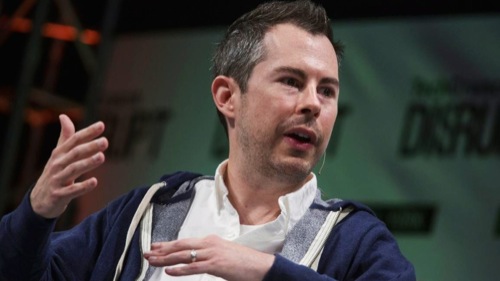
“Here is Bill Maris, of Google Ventures. This year alone Bill gets to invest $425 million of Google’s money, and his stated goal is to live forever.
He’s explained that the worst part of being a billionaire is going to the grave with everyone else. “I just hope to live long enough not to die.”
I went to school with Bill. He’s a nice guy. But making him immortal is not going to make life better for anyone in my city. It will just exacerbate the rent crisis.”
Sylvina Ocampo, The Pines (book here).
You didn’t listen to the beating of a tree’s heart,
couched against the trunk gazing upwards,
you didn’t see the leaves moving
with the throb of a heart,
you didn’t feel the shudder
of the swaying branches above your body,
you didn’t listen to the heart of the pines
when the wind moves them and those leaves
that are like green fragrant pins
fall, and when the clouds pass,
you didn’t see that the world was turning,
the entire world, and you didn’t feel
that the sky was drawing near,
was entering inside the pines,
and that you were disappearing, penetrating with it
inside the pines, becoming in that sky another tree.
Photo by Paloma Wool via berlin-artparasites.

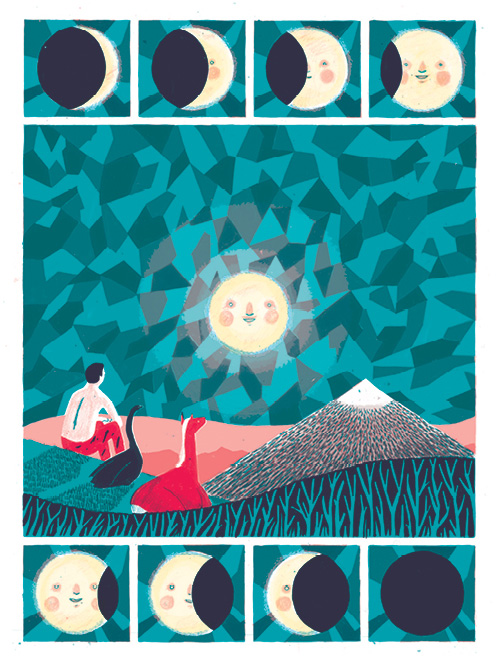
Rob Hunter: Luna in A Graphic Cosmogony, via Maria Popova.

From the Harvard Business Review:
In my view, the main reason for the uneven management sex ratio is our inability to discern between confidence and competence. That is, because we (people in general) commonly misinterpret displays of confidence as a sign of competence, we are fooled into believing that men are better leaders than women. In other words, when it comes to leadership, the only advantage that men have over women (e.g., from Argentina to Norway and the USA to Japan) is the fact that manifestations of hubris — often masked as charisma or charm — are commonly mistaken for leadership potential, and that these occur much more frequently in men than in women.
This is consistent with the finding that leaderless groups have a natural tendency to elect self-centered, overconfident and narcissistic individuals as leaders, and that these personality characteristics are not equally common in men and women. In line, Freud argued that the psychological process of leadership occurs because a group of people — the followers — have replaced their own narcissistic tendencies with those of the leader, such that their love for the leader is a disguised form of self-love, or a substitute for their inability to love themselves. “Another person’s narcissism”, he said, “has a great attraction for those who have renounced part of their own… as if we envied them for maintaining a blissful state of mind.”
Nordic Affect, Clockworking.
I went to the Arlene Shechet exhibit at the ICA last month, and even though I’m normally a really well-behaved gallery-goer it took nearly every fibre of my being not to touch all the things. So much texture.






 lexgill.com