Jade Rivera, wall in Chorrillos.


Jade Rivera, wall in Chorrillos.
Nicholas Rapp visualizes data in beautiful ways. I love this map of shipping routes because the paths things take to find us (and leave us) are so often invisible.

From Angus Croll’s If Hemingway Wrote Javascript: Explained.
Borges’ solution is a variation on the Sieve of Eratosthenes algorithm by which the multiples of each known prime are marked as composite (non-prime). In this case, Borges has long legged monsters take the place of divisors. Each monster straddles one more stair than the monster that went before: 2, 3, 4, 5…up to the square root of the number of the highest stair. (for non-obvious reasons, Borges allows composite-gaited monsters to climb the stairs too). The untrodden stairs are the prime numbers.
|
1 2 3 4 5 6 7 8 9 10 11 12 13 14 15 16 17 18 19 20 21 22 23 24 25 26 27 |
// They speak (I know) of finials, newels and balustrades // of hidden spandrels and eternally clambering, broad-gaited beasts…
var monstersAscendingAStaircase = function(numberOfSteps) { var stairs = []; stepsUntrodden = []; var largestGait = Math.sqrt(numberOfSteps);
// A succession of creatures mount the stairs; // each creature’s stride exceeds that of its predecessor for (var i = 2; i <= largestGait; i++) { if (!stairs[i]) { for (var j = i * i; j <= numberOfSteps; j += i) { stairs[j] = “stomp”; } } }
// Long-limbed monsters won’t tread on prime numbered stairs. for (var i = 2; i <= numberOfSteps; i++) { if(!stairs[i]) { stepsUntrodden.push(i); } }
// Here, then, is our answer. return stepsUntrodden; }; |
“To become the absurd hero of Candyland!” — from Existential Comics.

From Spaghetti Toes — a father illustrates things his 3 year old daughter says.
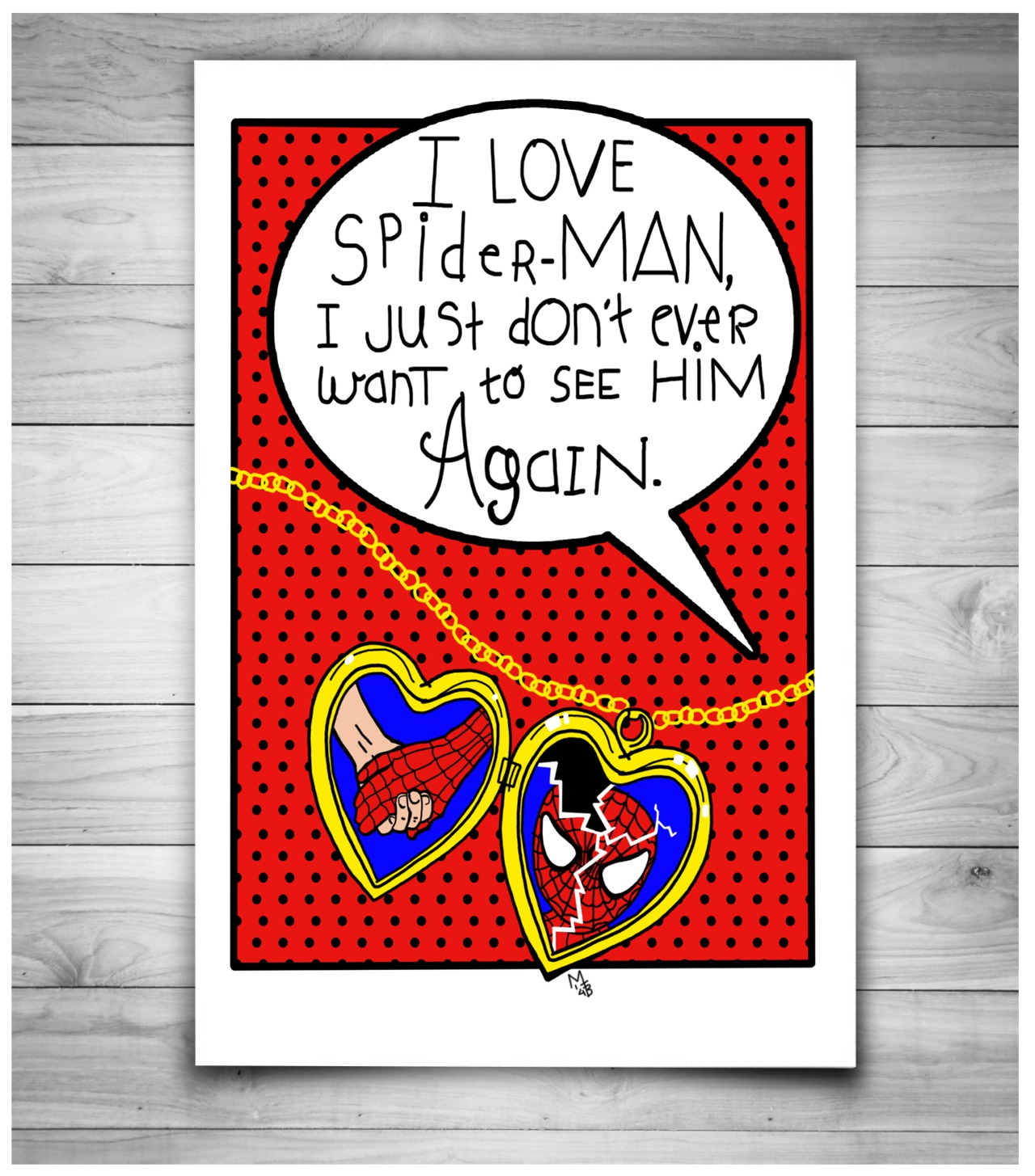
John Frank Weaver‘s Artisanal Attorney:
“How is an artisanal attorney different from any other attorney? Like other artisans, I pay close attention to my ingredients and process; I am intimately involved in all stages of creation. Other attorneys print their documents on paper they buy in mass-produced boxes, tens of thousands of sheets at a time, using ink that mechanically jets onto the page. I make my own paper by hand, using the traditional methods of 14th-century book publishers, who printed their works on linen and vellum. The flax for the linen grows along the sides of a nearby swimming hole, and the plants’ growth is influenced by the laughter of children in the summer, when I pick it by hand. The vellum comes from the grass-fed cows of an area farm; to give the cows more agency in the vellum-making process, I let them choose the pumice I will treat their hides with after slaughter. I also make my own ink, using the ink of squid I raise myself in a PETA-approved salt-water aquarium in my office. You can meet all my squid during our initial meeting and pick which one you want for the ink on your will or healthcare power of attorney.
After crafting your paper and extracting your ink, I painstakingly draft your legal documents using the tools and techniques of an 18th-century barrister. A feather quill will write the motion to dismiss your traffic ticket on a beautiful vellum sheet in large, ornate letters that will appear familiar to you if you’ve looked at a reproduction on the “Conftitution.” S’s will look like f’s, the first word of each paragraph will be comically oversized in the historic manner, and all documents will be rolled up like a poster, just like the Declaration of Independence and Constitution.”
I wish I had time to write a response to this article because it raises so many important issues but ultimately misdiagnoses them (and consequently comes to the wrong conclusions). Are you the pseudonymous person who wrote this? Because I want to buy you a drink and tell you that it’ll all be okay. Sure, the petty scene of low-stakes campus politics may be characterized by oppression olympics and the exhausting politics of performance. But outside of that tiny world, there are real, big issues of economic and social justice that are worth working on—and inspiring, innovative people doing that work who couldn’t care less about a preachy social club. It’s like high school: eventually you realize that all that time you spent worrying about who’s punk enough was kind of missing the point.
[From earlier this month]
I really love this little story from 99% Invisible: There is a Light That Never Goes Out.

A surprising little gem from Terry Eagleton in Adbusters.
“A jazz group which is improvising obviously differs from a symphony orchestra, since to a large extent each member is free to express herself as she likes. But she does so with a receptive sensitivity to the self-expressive performance of the other musicians. The complex harmony that they fashion comes not from playing from a collective score, but from the free musical expression of each member acting as the basis for the free expression of the others. As each player grows more musically eloquent, the others draw inspiration from this and are spurred to greater heights. There is no conflict here between freedom and the good of the whole, yet the image is the reverse of totalitarian. Though each performer contributes to the greater good of the whole, she does so not by some grim-lipped self sacrifice but simply by expressing herself. There is self-realization but only through the loss of self in the music as a whole.
Though I have to admit that I think this excerpt stands better alone, rather than sandwiched between lines of blunt force political commentary. Via friend and co-conspirator Gonzo Nieto.
Sometimes I find myself enjoying something, and then I realize that it actually just reflects a bizarre and highly specific hybrid of both of my parents’ interests.
See, for example, Star Wars presented by Wes Anderson, or this detailed examination of typography in science fiction.
The CBC is asking how you’ll remember the massacre of fourteen women that happened on this day in 1989 and almost all ofthe responses are from women. So, to the men in my life: please take a moment today to talk about their deaths to your male friends, brothers, and the boys who look up to you. Talk about why men are taught to feel threatened by women’s talent, power, and success. Think about the way men talk about women in “pick up” scenes, online, and when none are in the room. Confront your own internalized resentment towards women who exceed the expectations imposed upon them, who compete, who step into worlds where they are told they don’t belong. Feel inspired by all the women you know who, despite a world steeping in this violence, dare to live their lives in brave and authentic ways just the same.

Photo via Remi St-Onge.
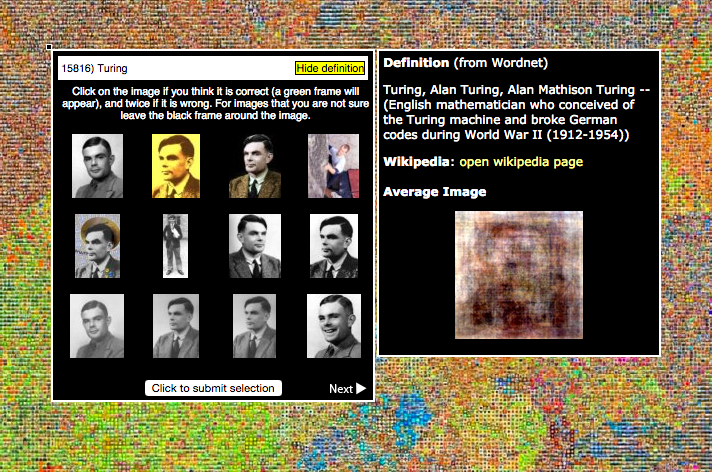
From this collection of eighty million tiny images, part of a visual dictionary teaching machines to see.
From The First Black Friday by William Bradford, by River Clegg.
Now as it happened, in the din and the tumulte, a good and freely-thinking Aborigine did stand in his breechclouts and inquire with great clarity the reasone for such monster savings, as well as why they should expire with the sun’s setting, which seemed rather arbitrary when one thought aboute it. But these wordes did fall on ears deafened by rumours of two-for-one buckles, which could be affix’d to one’s shoe or belt, or sportingly to the front of one’s hat—a most unheard-of steale!
Disputes arose. Two men did grow entangled over the proper and true ownership of a paire of stockings, with one and the other both claiming to have mark’d the iteme first. A mirror of good qualitie shattered as two women and a boy not seven years olde contested for it, after which the danger of being cut by brokene glasse did rise considerably, and was the source of great irritance. One large man drew a warlike club, newly purchas’d perhaps, and with it brained another sharply, and then another in an effort to procure his goodes, all the while shouting “rarrr.”
Such was the bloodlust stirred by the rock-bottome prices on this blackest of Fridayes.
Last night I had a dream that felt like H. R. Giger did the concept art.
“The Dutch customs once thought my pictures were photos. Where on earth did they think I could have photographed my subjects? In Hell, perhaps?”

Hernan Marin, graphite on metal, paper and glass.


 lexgill.com